








TL;DR
- Private data requires authentication (passwords, encryption) and includes PII, internal metrics, and gated content. Accessing it without permission is unauthorized.
- Public data requires no login and includes e-commerce listings, public social posts, and government records. This is the foundation of business intelligence.
- 82% of organizations consider public web data critical to their strategy for pricing, investment analysis, and sentiment monitoring.
- GDPR fines have exceeded €5.65 billion. Even public data with personal identifiers must be processed responsibly.
- Safe acquisition requires verifying sources are public, using residential proxy networks, and avoiding website disruption.
- The distinction dictates collection methods and compliance requirements. Confusing the two leads to security breaches and regulatory penalties.
At the end of this article, you will understand:
- The clear definitions that separate private internal data from public web data.
- Why public web data is a critical asset for 82% of modern organizations.
- How to navigate compliance without worrying about legal jargon.
- The best methods for acquiring public data to fuel your business strategy.
Let’s dive in!
Defining the Core Differences
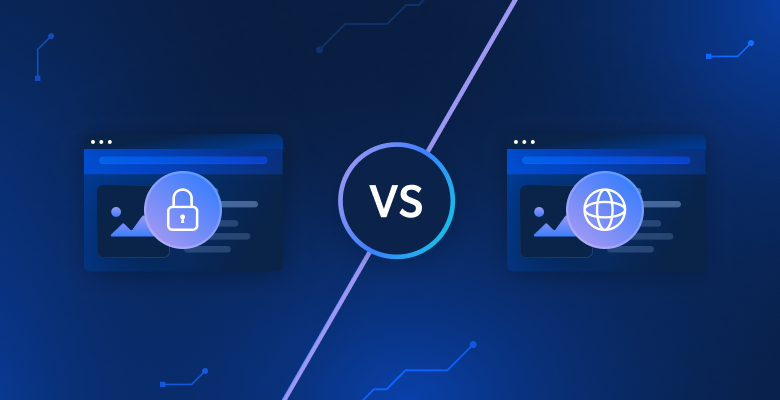
Data is often treated as a single asset, but for business intelligence, you must distinguish between what is private and what is public. This distinction dictates how you can collect, store, and use information.
What is Private Data?
Private data is information that is not intended for general consumption. It is usually protected by authentication barriers like passwords or encryption. This category includes sensitive details where the owner has a reasonable expectation of privacy.
Examples include:
- Internal Business Metrics: Unreleased financial reports, employee salaries, and trade secrets.
- Personally Identifiable Information (PII): Medical records, private emails, and social security numbers.
- Gated Content: Information inside a private Facebook group or behind a corporate firewall.
Accessing this data without explicit permission is unauthorized and poses significant security risks. Organizations must protect this boundary rigourously. You can see how industry leaders handle this in our commitment to data privacy.
What is Public Data?
Public data is the open layer of the internet. It consists of information that anyone can view without logging in or bypassing security measures. This is the vast ocean of facts that powers market research, price comparison, and trend analysis.
Examples include:
- E-commerce: Product prices, descriptions, and reviews on sites like Amazon or eBay.
- Public Social Media: Profiles and posts on platforms like X (Twitter) or LinkedIn that are set to public visibility.
- Government Records: Census statistics, property records, and public sector filings.
While this data is accessible to everyone, collecting it at scale requires the right tools. Businesses use ready-made datasets to turn unstructured web pages into organized files for analysis.
The Business Value of Public Data
The appetite for public data is growing rapidly as companies realize its value for decision-making. According to a recent industry report, 82% of organizations state that public web data is critical to their future strategy.
Companies leverage this data to gain a competitive edge in several ways:
- Dynamic Pricing: Retailers track competitor prices in real-time to adjust their own offers.
- Alternative Data for Finance: Investors analyze web traffic or job posting trends to predict stock performance. You can learn more about this in our guide on what is alternative data.
- Sentiment Analysis: Brands monitor public reviews to detect shifts in consumer opinion before they impact sales.
To gather this information efficiently, businesses rely on tools like the Web Scraper API, which automates the collection process and handles the technical challenges of reading complex websites.
Navigating Compliance
Even though public data is accessible, you must still handle it responsibly. Regulations like GDPR in Europe and CCPA in the US have set standards for data processing.
Recent statistics show the cost of ignoring these standards. Since the introduction of GDPR, fines for data mismanagement have totaled over €5.65 billion. This highlights the importance of treating all data with care, especially if it contains personal identifiers.
The rule of thumb is simple. Just because data is public does not mean you can use it in any way you want. If you collect public social media profiles, you are still processing personal data. You need to ensure your use case is legitimate and respectful of user rights.
For a practical look at safe data practices, review our Ethical Data Collection Guidelines.
Strategies for Safe Data Acquisition
To build a sustainable data strategy, you need to ensure your collection methods are robust and respectful.
1. Verify the Source
Confirm that the data you target is truly public. If you need to log into a user account to see it, consider it private or semi-private.
2. Use Ethical Infrastructure
When collecting public data at scale, your activity should not disrupt the target website. Using a high-quality Residential Proxy Network allows you to gather data transparently. This ensures you see the same content as a real user, such as localized pricing, without triggering anti-bot blocks.
3. Outsource the Complexity
Many enterprises prefer to avoid the technical and compliance risks entirely. Managed Data Services allow you to request specific data points and receive a clean feed directly to your storage, handled by a team that ensures all legal protocols are followed.
Conclusion
Understanding the difference between private and public data is the first step in modern business intelligence. Private data requires strict protection. Public data offers a massive opportunity for growth and insight.
By distinguishing between the two and using enterprise-grade tools like the Web Unlocker, you can access the public web safely. This approach ensures you get the data you need while maintaining the highest standards of compliance.
Ready to access public web data responsibly? Start your free trial with Bright Data today.


Senior SEO Specialist
 6 years experience
Daniel Shashko is a Senior SEO/GEO at Bright Data, specializing in B2B marketing, international SEO, and building AI-powered agents, apps, and web tools.