How do you understand what people think about a business, not just what the business says about itself?
That question sits at the center of our second year supporting Forbes’ America’s Best-In-State Companies rankings through Bright Data’s journalism program.
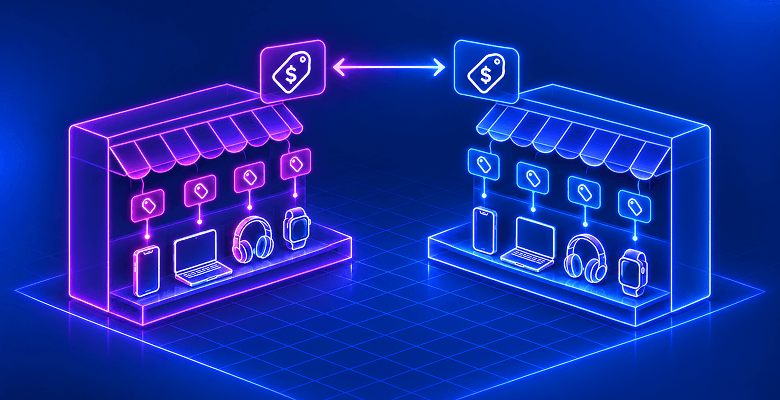
It is also a question businesses ask every day. A retailer wants to understand how its stores compare with competitors. A restaurant group wants to know where the customer experience is falling short. A market research team wants to connect company information with what buyers and employees are saying.
For Forbes, the goal was an editorial ranking. For a business, it might be a decision about customer service, market positioning, or expansion. Both start with the same requirement: relevant data, connected to the right companies, with enough context to interpret it.
Forbes’ 2027 Best-In-State rankings recognize companies within their home states, bringing regional businesses into view alongside nationally recognized brands. Its assessment incorporates customer feedback, employee reviews, company size, and additional business-quality measures where available.
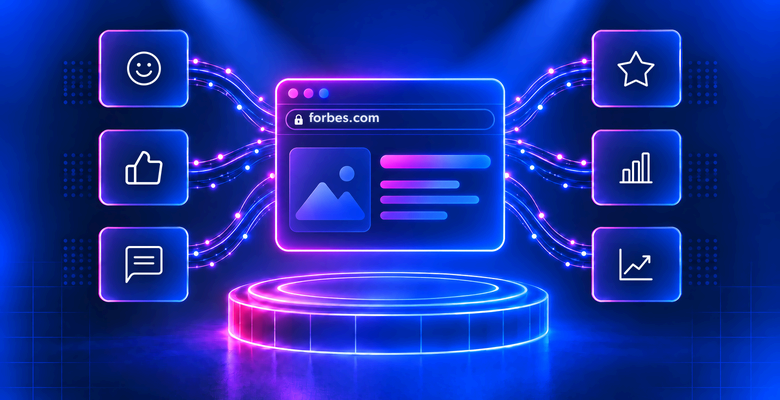
That required multiple perspectives. Forbes used workforce information from Data Axle, employee feedback from Glassdoor, and customer feedback from Yelp and Google. Bright Data contributed Google Maps review data to that broader assessment.
Our contribution addressed a specific part of the challenge: connecting the companies Forbes was evaluating with relevant Google Maps locations and the customer feedback associated with them.
For this year’s project, Forbes supplied headquarters and company-state records. Our team used company names, websites or domains, and states to identify relevant in-state Google Maps locations.
For multi-location businesses, that approach could identify several locations associated with the same company rather than treating one headquarters address as the entire business.
A company record identifies an organization. Location-level feedback adds evidence about how customers experience its operations.
This is where public web data becomes useful beyond a standalone list of businesses. Connecting company information with customer ratings and reviews creates a richer foundation for analysis.
In this project, our role was to provide data for Forbes’ assessment. Forbes combined that contribution with its other sources and applied its ranking methodology.
Customer feedback and employee feedback answer different questions. Neither should be treated as a substitute for the other.
Forbes brought those perspectives together. In my conversation with Forbes, I emphasized the importance of recent feedback and the additional context that comes from examining more than one source.
For a business, that is a useful model for enriching its own research.
Rather than asking only, “What is our average rating?”, a team can ask more specific questions:
- How does customer feedback differ across locations?
- Where do we outperform comparable businesses?
- Which aspects of the experience generate recurring praise or complaints?
- Does feedback from one source tell a different story from another?
- Are recent reviews consistent with our longer-term reputation?
These are practical applications of the sentiment analysis and market research workflows Bright Data supports: connecting public feedback with business information to investigate brand perception, competitive positioning, and customer needs.
Define the companies and markets you need to understand. Identify the public sources that can contribute relevant evidence. Connect the records carefully and establish what can and cannot be compared.
Forbes used that evidence to inform a ranking. Businesses can use a similar approach to ask better questions about their own place in the market.
Looking to understand how customers view your business across locations and sources?


Senior Director of PR and Communications
 17 years experience
Jennifer has experience building comprehensive communications programs, including analyst relations and partnerships, that drive KPIs for public and private companies across multiple industries.